
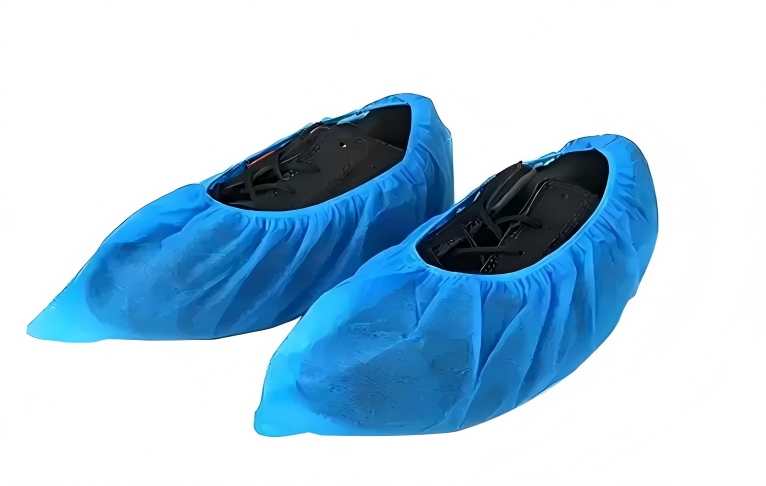
A finished shoe cover may be a simple disposable product, but producing thousands of consistent pieces requires several processes to work together precisely. The material has to move through the line without excessive deviation, the elastic needs to stay in the correct position, and the sealing and cutting stages must follow the intended product dimensions. When any of these steps becomes unstable, the problem can appear directly in the finished shoe cover.
Production requirements can also vary considerably from one manufacturer to another. Some lines are built for high-volume general-purpose shoe covers, while others need to handle specific materials, customized sizes, or applications where sealing consistency is especially important. The equipment selected should reflect these differences instead of relying on a one-size-fits-all configuration.
This makes the technical specifications of a disposable shoe cover machine worth examining from the perspective of the complete production process. Material feeding, forming, sealing, production speed, automation, and adjustment range all contribute to the final result. These are also the areas where experienced shoe cover making machine manufacturers can help manufacturers determine the most suitable machine configuration for their products.
The material determines many of the conditions under which a shoe cover machine needs to operate. Nonwoven fabric, PP, PE, CPE, and SMS can have different characteristics during feeding, forming, sealing, and cutting. A machine that handles one substrate well still needs to be evaluated carefully when another material is introduced.
Nonwoven fabric is often selected when manufacturers need a lightweight and breathable disposable cover, while PE or CPE can be used when different levels of moisture or liquid resistance are required. SMS combines multiple nonwoven layers and may be selected for applications where barrier performance and fabric structure are important.
Material width and web stability also affect the production process. Lightweight material can move differently from a heavier or more rigid substrate, while variations in tension can influence the position of the elastic and the final shape of the cover. A reliable disposable shoe cover machine therefore needs a feeding system that keeps the material moving consistently through the forming and sealing stages.
Atomic Ant Machinery specifies nonwoven fabric, PP, PE, CPE, and SMS as compatible materials for its automatic shoe cover making machine. The machine integrates material feeding, forming, elastic insertion, sealing, cutting, and counting into one production process.
Before choosing equipment, manufacturers should provide the supplier with the actual material type, width, thickness or grammage where applicable, roll condition, and expected production volume. This information makes it easier to determine whether the standard machine configuration is suitable or whether adjustments are needed.
The finished dimensions of a shoe cover should be defined before the machine configuration is finalized. Different footwear sizes and applications can require different cover dimensions, while the elastic opening also needs to provide a practical fit around the shoe.
Forming accuracy matters because a small variation can become more noticeable when production is repeated thousands of times. The material needs to be positioned correctly before sealing and cutting so that the finished covers maintain a consistent shape. Elastic insertion also needs to remain coordinated with the rest of the process rather than being treated as an independent operation.
Atomic Ant Machinery states that shoe cover size, elastic tension, sealing width, and machine configuration can be customized according to customer requirements. This provides additional flexibility for manufacturers producing more than one shoe cover specification.
When discussing a machine with shoe cover making machine manufacturers, it is useful to provide a finished product sample or detailed dimensions whenever possible. Information about the cover length and width, elastic type, opening size, material, and required sealing area can help the manufacturer determine the appropriate forming and cutting configuration.
| Production Factor | Specification to Evaluate | Effect on Production |
|---|---|---|
| Raw material | Material type and feeding compatibility | Influences web stability, sealing, and forming |
| Shoe cover dimensions | Length, width, and finished shape | Determines forming and cutting requirements |
| Elastic opening | Elastic type and tension | Affects fit and finished-product consistency |
| Sealing | Ultrasonic or heat sealing configuration | Influences seam strength and appearance |
| Production volume | Required pairs per minute | Determines suitable machine capacity |
| Product variation | Adjustable machine parameters | Affects changeover flexibility and repeatability |
The sealing process determines how the material layers are joined and has a direct effect on the integrity of the finished shoe cover. Even when material feeding and forming are stable, inconsistent sealing can result in weak edges, poor appearance, or products that do not withstand normal handling.
Ultrasonic sealing and heat sealing are two approaches that can be used for disposable shoe cover production. The appropriate method depends on the material and the required product characteristics. Ultrasonic bonding can join compatible materials without conventional thread stitching, while heat sealing can be suitable for thermoplastic materials when the process parameters are correctly controlled.
Sealing quality also depends on the relationship between sealing pressure, energy or temperature, material position, and production speed. These variables cannot always be evaluated independently. Increasing line speed, for instance, may require the sealing process to maintain sufficient bonding performance within a shorter processing cycle.
Atomic Ant Machinery's shoe cover equipment can be configured with ultrasonic sealing or heat sealing. Its published specifications describe ultrasonic sealing as providing firm and consistent sealing edges and helping reduce tearing and defective products.
For manufacturers comparing shoe cover making machine manufacturers, the key question is not simply which sealing technology is available. The more useful question is whether the proposed sealing method has been matched to the actual material and production speed. Testing the intended substrate before finalizing the configuration can provide a much clearer indication of expected performance.
Production speed is often one of the first numbers buyers compare, but it should be considered alongside product quality and operating stability. A machine that runs quickly but requires frequent adjustment or generates a high reject rate may provide less useful output than expected.
Atomic Ant Machinery specifies a production speed of 200–300 pairs per minute for its automatic shoe cover making machine, with the actual speed depending on factors such as material, shoe cover size, and machine configuration. This is a specification for the Atomic Ant machine rather than a universal production rate for every disposable shoe cover machine.
At higher production speeds, the individual stages need to remain synchronized. Material feeding, elastic insertion, forming, sealing, cutting, and counting all contribute to the final output. If one stage becomes unstable, it can affect the production flow that follows.
For this reason, manufacturers should look at more than nominal pairs per minute when assessing machine capacity. Operator requirements, material loading, changeover time, reject levels, maintenance access, and production continuity can all influence the effective output of the line.
A practical equipment evaluation should therefore distinguish between the machine's stated maximum or reference speed and the production speed that can be maintained consistently with the required product quality.
A shoe cover production line combines several operations into a relatively compact process. Without coordinated control, each stage can introduce variation that eventually appears in the finished product. Automation helps keep these operations synchronized and reduces the amount of manual adjustment required during normal production.
Atomic Ant Machinery's automatic shoe cover making machine uses PLC control and touchscreen operation. The production process integrates automatic feeding, forming, elastic insertion, sealing, cutting, and counting.
For a disposable shoe cover machine, PLC-based control can provide a more consistent operating sequence and make production parameters easier to manage. The touchscreen interface also gives operators a centralized point for machine operation rather than requiring separate manual adjustments for every production stage.
Automation can be particularly valuable during long production runs. Once the appropriate settings have been established, operators can focus on monitoring material supply, machine status, and finished-product quality instead of continuously correcting the production process by hand.
Atomic Ant Machinery's wider automation platform also uses PLC programming, touchscreens, servo-related control components, automatic correction and reset functions, and fault self-diagnosis on its machinery range. These capabilities illustrate why the control architecture should be considered as part of the complete machine rather than as an optional feature added to a basic mechanical system.
The same basic shoe cover format can serve very different markets. Medical facilities, surgical environments, cleanrooms, food processing plants, laboratories, and industrial workplaces may have different expectations for material, product dimensions, and sealing performance.
A manufacturer supplying several of these markets may therefore benefit from equipment that can accommodate different product specifications. Adjustable shoe cover dimensions, elastic tension, sealing width, and other machine parameters can make it easier to respond to changing customer requirements without replacing the entire production line.
Atomic Ant Machinery lists medical, surgical, cleanroom, food processing, laboratory, and industrial protection among the applications for its shoe cover making equipment. Its published specifications also state that shoe cover size and machine configuration can be customized.
Flexibility should still be based on actual business requirements. A manufacturer producing one standardized shoe cover in large quantities may prioritize throughput and process stability, while a manufacturer serving multiple customers may place greater value on adjustment range and changeover convenience.
For buyers evaluating shoe cover making machine manufacturers, it is also useful to consider the supplier's broader experience with disposable medical and nonwoven machinery. Atomic Ant Machinery develops equipment for disposable medical and sanitary products, including nonwoven folding machinery, medical product making machines, and packaging equipment. Its broader range of medical and nonwoven production machinery can therefore be reviewed when planning related production processes.
The best configuration should ultimately be determined from the actual product rather than from a generic machine specification. Manufacturers can provide the intended material, finished dimensions, elastic requirements, target output, and application when discussing equipment. This allows the machine configuration to be evaluated against the real production conditions before an investment is finalized.
Manufacturers with specific requirements can also discuss their shoe cover production requirements with Atomic Ant Machinery to review material compatibility, production capacity, sealing options, and possible customization.
Selecting a shoe cover production machine requires a complete view of how the finished product is made. Material feeding, forming accuracy, elastic insertion, sealing, cutting, production speed, automation, and machine flexibility all influence the consistency and efficiency of the final production line.
A suitable disposable shoe cover machine should provide the required output without sacrificing forming or sealing stability. At the same time, experienced shoe cover making machine manufacturers can help manufacturers evaluate whether the standard configuration is sufficient or whether adjustments are needed for specific materials, sizes, or applications.
Instead of choosing equipment based on speed alone, manufacturers can compare each specification against their actual product requirements. This approach makes it easier to select a production setup that delivers consistent shoe covers today while retaining enough flexibility to accommodate future product and market requirements.
Depending on the configuration, Atomic Ant Machinery's machine can process nonwoven fabric, PP, PE, CPE, and SMS materials.
Atomic Ant Machinery specifies 200–300 pairs per minute for its automatic shoe cover making machine. Actual speed depends on material, product size, and machine configuration.
Yes. Shoe cover size, elastic tension, sealing width, and machine configuration can be customized according to production requirements.
The machine can be configured for ultrasonic sealing or heat sealing, depending on the material and production requirements.
Typical applications include medical and surgical environments, cleanrooms, food processing, laboratories, and industrial protection.
Provide the material type, shoe cover dimensions, elastic requirements, target production speed, sealing requirements, and intended application. These details help the manufacturer recommend an appropriate configuration.
 EN
EN