
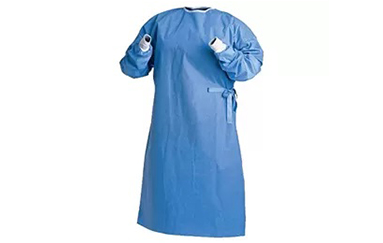
The global healthcare industry is rapidly expanding, and with it, the demand for high-quality disposable protective apparel is increasing. Among these, surgical gowns play a critical role in maintaining sterile environments in hospitals, clinics, and laboratories.
To meet this demand efficiently, manufacturers rely on advanced automation systems such as the surgical gown making machine. These machines are designed to produce consistent, high-quality protective garments at scale while reducing labor costs and improving production efficiency.
A surgical gown making machine is an automated production system designed to manufacture disposable medical gowns used in surgical and clinical environments. It integrates multiple processes such as fabric feeding, cutting, folding, sealing, and sometimes packaging.
Modern systems, such as those offered by Atomic Ant Machinery, are engineered for high-speed, hygienic, and fully automated production lines.
These machines are widely used in:
Hospitals and healthcare supply factories
Disposable medical apparel manufacturers
PPE production facilities
Export-oriented nonwoven fabric factories
In essence, a surgical gown manufacturing machine replaces manual sewing and assembly, ensuring higher consistency and hygiene standards.
Different production needs require different machine configurations. Below are the main types:
Complete automation from fabric feeding to final folding
Minimal labor required
High output efficiency
Ideal for large-scale manufacturers
Requires partial manual intervention
Suitable for medium-sized factories
Lower initial investment
Can produce surgical gowns, isolation gowns, and related PPE items
Flexible production capabilities
Suitable for diversified product lines
Includes cutting, sealing, ultrasonic welding, and packaging
High-speed industrial production solution
Often used in export-focused factories
A high-performance medical gown manufacturing machine should include the following essential features:
| Feature | Description |
|---|---|
| Automatic Fabric Feeding | Ensures continuous and stable production |
| Ultrasonic Welding System | Provides strong, needle-free sealing |
| High-Speed Output | Improves production capacity significantly |
| PLC Control System | Enables intelligent operation and monitoring |
| Adjustable Size Settings | Supports different gown specifications |
| Waste Reduction System | Optimizes raw material usage |
Hygienic production environment (no manual contamination)
Low maintenance design
Energy-efficient operation
Compatible with nonwoven fabrics such as PP, SMS, and PP+PE laminates
According to the product page of Atomic Ant Machinery, their surgical gown making machine is designed with automation, precision, and scalability in mind, making it suitable for modern medical PPE production demands.
Investing in a surgical gown manufacturing machine or full production line offers several strategic benefits:
Automation significantly increases output compared to manual production, enabling manufacturers to meet large-scale hospital or export orders.
Fewer workers are required to operate the production line, reducing long-term operational expenses.
Automated systems ensure uniform stitching, sealing, and sizing, reducing defect rates.
Modern machines are designed to meet hygiene and safety standards required in medical PPE production.
Manufacturers can easily scale production by adding modules or upgrading automation levels.
Some systems can also produce related items such as isolation gowns and even medical shorts making machine applications in certain configurations.
The surgical gown production solutions provided by Atomic Ant Machinery are designed for modern PPE manufacturing demands. According to their product system overview, the equipment emphasizes:
Full or semi-automatic operation options
Stable ultrasonic sealing technology
High-speed production efficiency
Customizable gown sizes and designs
Industrial-grade durability
More details can be found on their official product page:
To choose the right machine, evaluate production scale, automation level, material compatibility, and product type. Large manufacturers should prioritize fully automated systems, while smaller businesses can start with semi-automatic machines.
Common materials include PP nonwoven fabric, SMS fabric, PP+PE laminated materials, and spunlace nonwoven fabric. These materials are selected based on protection level and comfort requirements.
No. Small factories can operate efficiently with semi-automatic machines. Full automation is recommended only when production demand is high and consistent.
The surgical gown making machine has become an essential asset in modern medical PPE manufacturing. With increasing global demand for disposable protective apparel, investing in a reliable medical gown manufacturing machine or fully automated production line is a strategic decision for long-term scalability and profitability.
Manufacturers like Atomic Ant Machinery provide advanced solutions that combine automation, precision, and industrial reliability—making them a strong option for businesses aiming to enter or expand in the medical apparel production industry.
 EN
EN