EN
EN
Tel:
0532-85875067

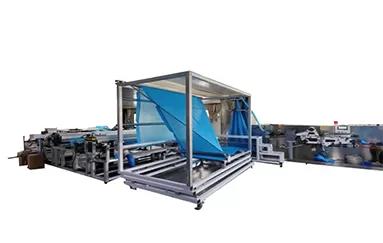
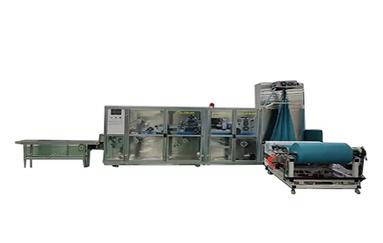
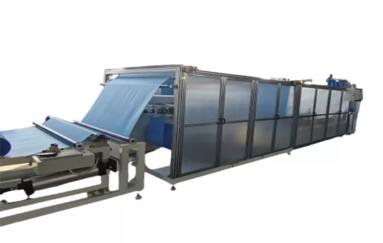
Our pillow cover making machine is designed to produce high-quality pillow covers and pillowcases for hospitals, hotels, and other hospitality industries. With automated folding and cutting processes, our pillow cover machine ensures precision, efficiency, and consistency in mass production.
The pillowcase making machine is equipped with an advanced cutting system that ensures precision and durability:
Knife Holder Assembly – Includes an upper blade and a lower rod, engineered for long-lasting performance.
High-Quality Upper Blade – Made from white steel, ensuring sharpness and clean cuts.
Reinforced Lower Rod – Constructed from Cr12 hardened material, heat-treated, and ground for durability.
360-Degree Cutting Capability – Allows for multi-directional cutting, improving efficiency and accuracy.
1. Production Speed & Output
Manual Production: Relies on operators for each step — cutting, folding, and sealing. Output is slow and inconsistent, typically limited to small batches.
Automatic Production: Servo-controlled drives and synchronized conveyors achieve high-speed continuous production. Atomic Ant’s automated line can deliver thousands of pillow covers per shift with consistent accuracy.
2. Hygiene & Sterile Manufacturing
Manual: Frequent human contact with nonwoven material increases contamination risk, which is unacceptable for hospital-grade products.
Automatic: The machine uses a fully enclosed, touch-free process. All contact parts are made of stainless steel or anodized aluminum, ensuring compliance with ISO 13485 and cleanroom production standards.
3. Product Consistency & Quality Control
Manual: Size deviations, uneven sealing, or poor edge finishing often occur.
Automatic: Precision cutting and ultrasonic sealing create uniform pillow covers every time. Built-in sensors and the PLC control system monitor each stage, minimizing waste and defects.
4. Labor Efficiency & Cost Savings
Manual: Requires multiple workers and intensive supervision. Labor costs rise as production scales.
Automatic: A single trained operator can run the line. The system reduces manual handling, saves energy, and cuts labor expenses by up to 70 % over time.
5. Material Handling & Flexibility
Manual: Difficult to handle delicate nonwoven or SMS fabrics consistently without tearing.
Automatic: Designed specifically for medical nonwoven materials such as PP, PE, SMS, SMMS, and laminated films. Operators can easily adjust roll width and product size through the touch-screen HMI.
6. Compliance & Traceability
Manual: Documentation and batch tracking are usually manual and error-prone.
Automatic: The integrated PLC can record production data and batch numbers for full traceability — a key requirement in regulated medical manufacturing environments.
7. Return on Investment
Manual: Low upfront cost but high long-term expense from labor, waste, and rework.
Automatic: Higher initial investment, but long-term savings from speed, hygiene compliance, and consistent output deliver a faster ROI and stronger competitiveness.